Sika Lau Loiasufanu / Carunaku - Tais Mane
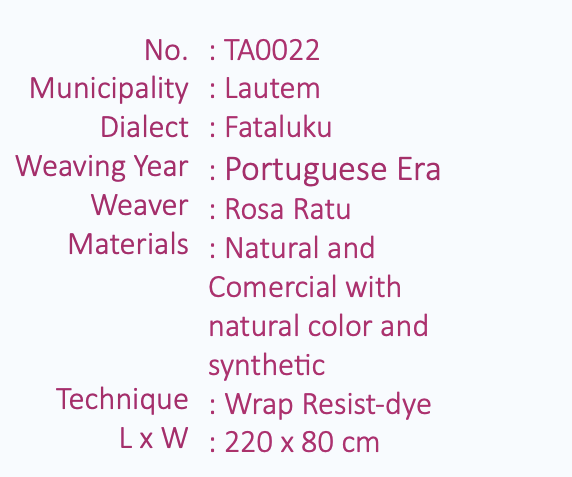
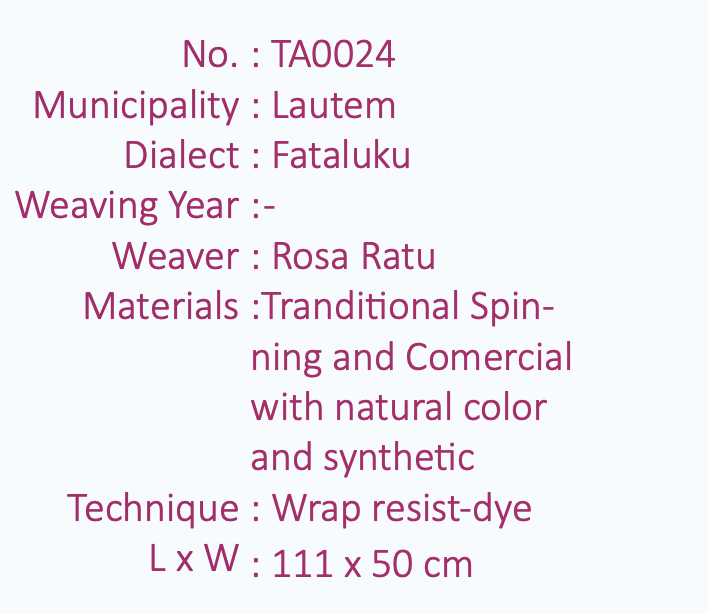
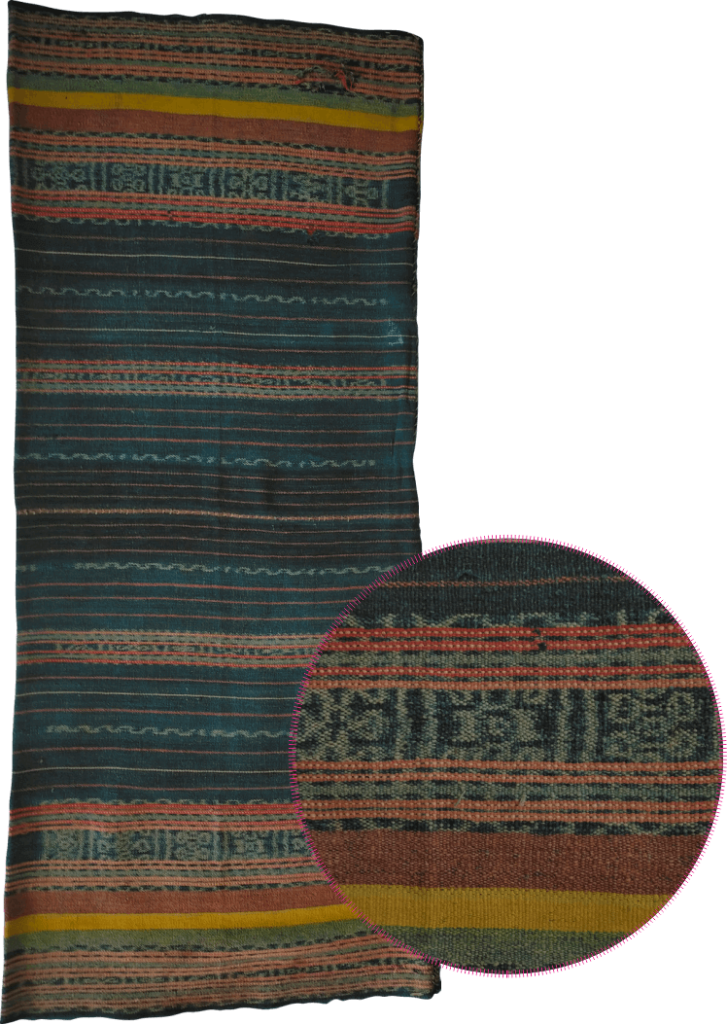
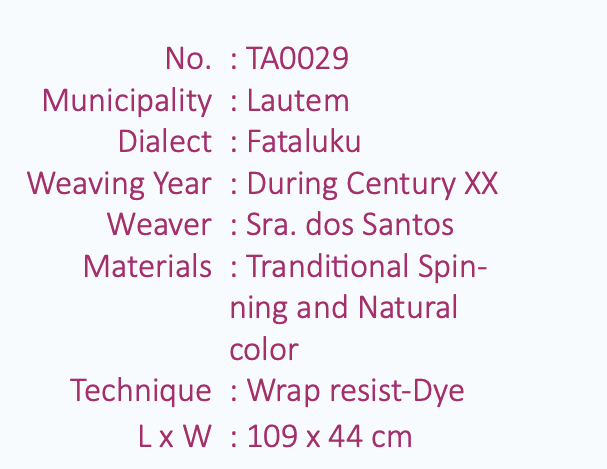
Textile Sikalau Loiasu-fanu is a culturally significant textile because of the resit-dye references to rock art in the Ili Kere-Kere cave and marine animals. This cloth is from the tutuala post-administrative collection. It is made of bright commercial cotton, but the motifs are colored using morinda citrifolia.
Carunaku -Tais Feto
Textiles woman’s cloth Carunaku are high-value textiles worn by the noble class- es. This textile’s primary colors are red and black. Taun-Tahan (T) (Indigo Suffiticosa) and Tahu (T) or mud are used to create both of these colors. Two black outlines are flanked by little futus called Opi and Kaununu. This tex- tile also includes a Futus in the middle that is part of the larger Futus. This cloth was made in the town of Fuiloro-Lospalos. Furthermore, references from Sisirana are used in this textile.
Lau fanu Porose-Sika- Lau Loi Asu Fanu-Tais Kahe Lau Fanu Porose
This cloth originates from the Lautem district’s Com village. The majority of it is produced in the village of Pairara. The technique utilized is a cross-stitch design reference. Cotton is imported from Portugal or purchased in stores. The name Laufanu was given to this material in reference to European embroidery.
Sikalau-Tais Feto
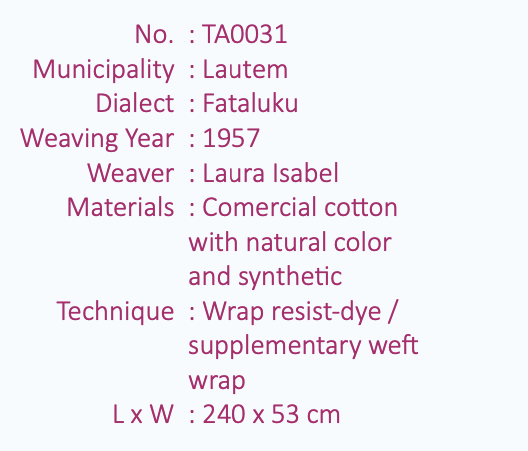
This textile comes from Tutuala-Lautem. This textile was purchased by Umane in the ceremony tradition of life known as “festa barlake” in 1930.