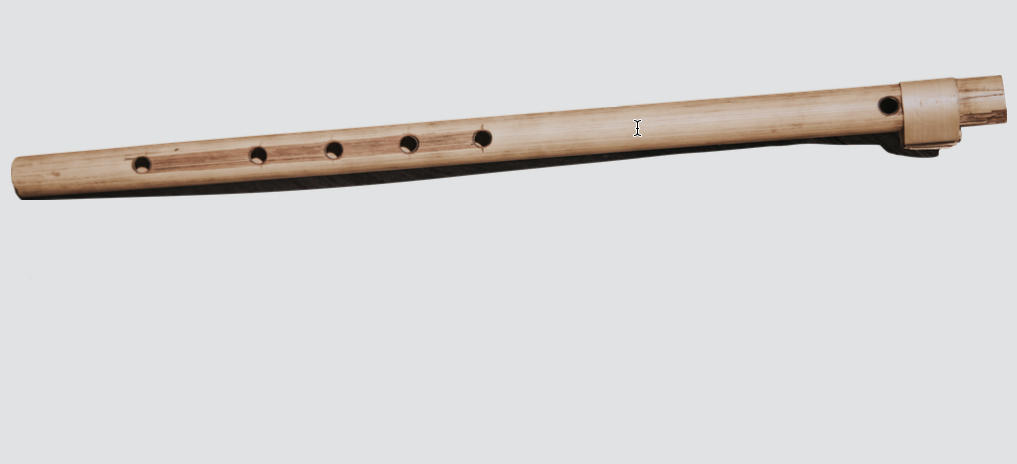
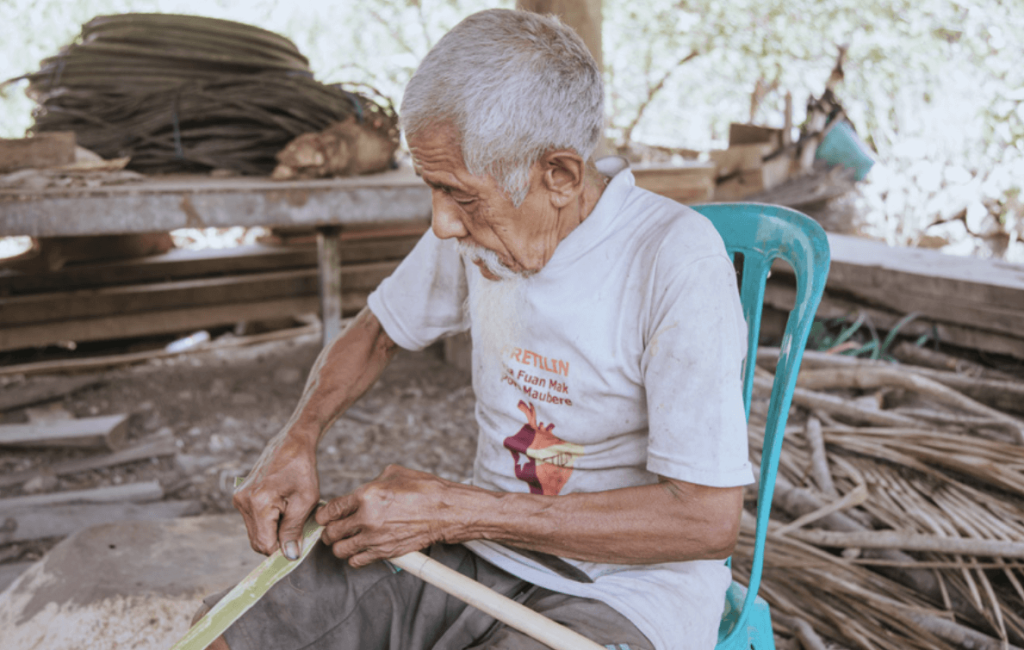
: The traditional musical instrument transmitted from ancestors, used by buffalo keepers to look after their buffalos.
: Pre-History
: “Asalainu” (ethnic group)
: Practice continued
: 2013
: –
Short Summary
Kaiu, from the local Makasa’e language, is a traditional Timorese flute, usually made of au-fafulu, a type of bamboo. This musical instrument has seven (7) holes: two (2) at the top and five (5) at the bottom. The manufacturing technique requires precision in measuring and drilling the holes, and involves the use of a batar kain (internal part), which is covered with a stick to adjust the pitch. Kaiu is valued for having the ability to produce melodies that evoke deep emotions and connections to tradition and family history.
The learning of this flute takes place orally and practically, passed down from generation to generation. In general, children start playing at an early age with the level of the early elementary school classes, during rural activities such as herding livestock and holding night watches. They learn by observing and imitating family members or more experienced people, who show how to play and create melodies.