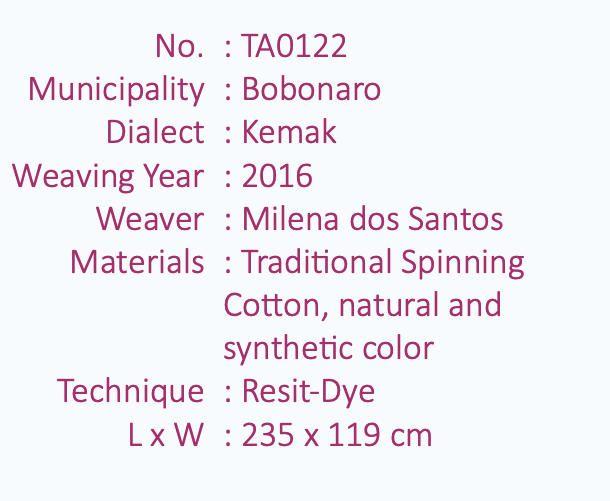
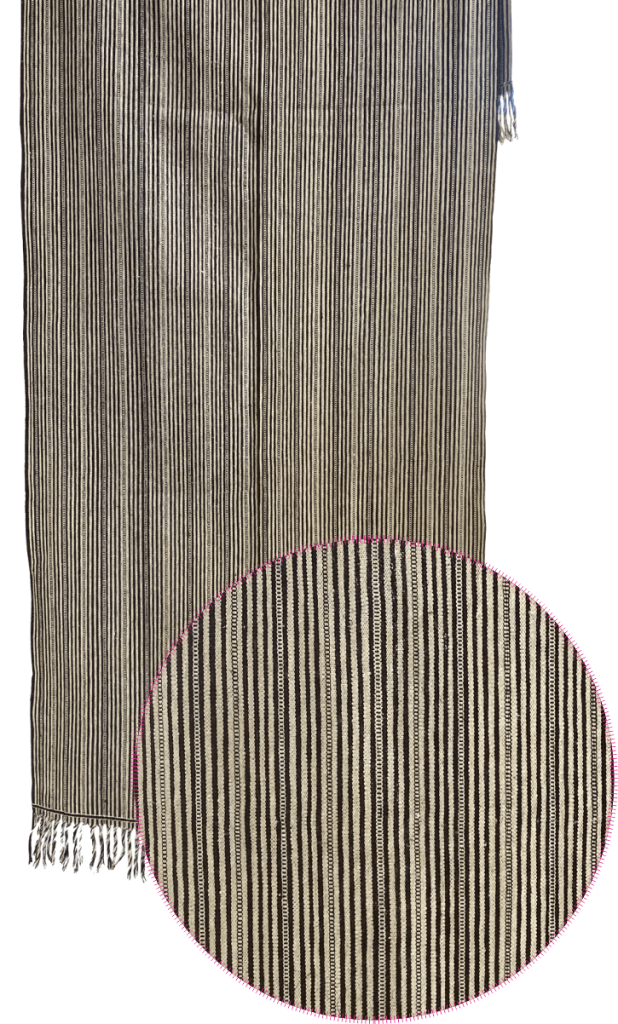
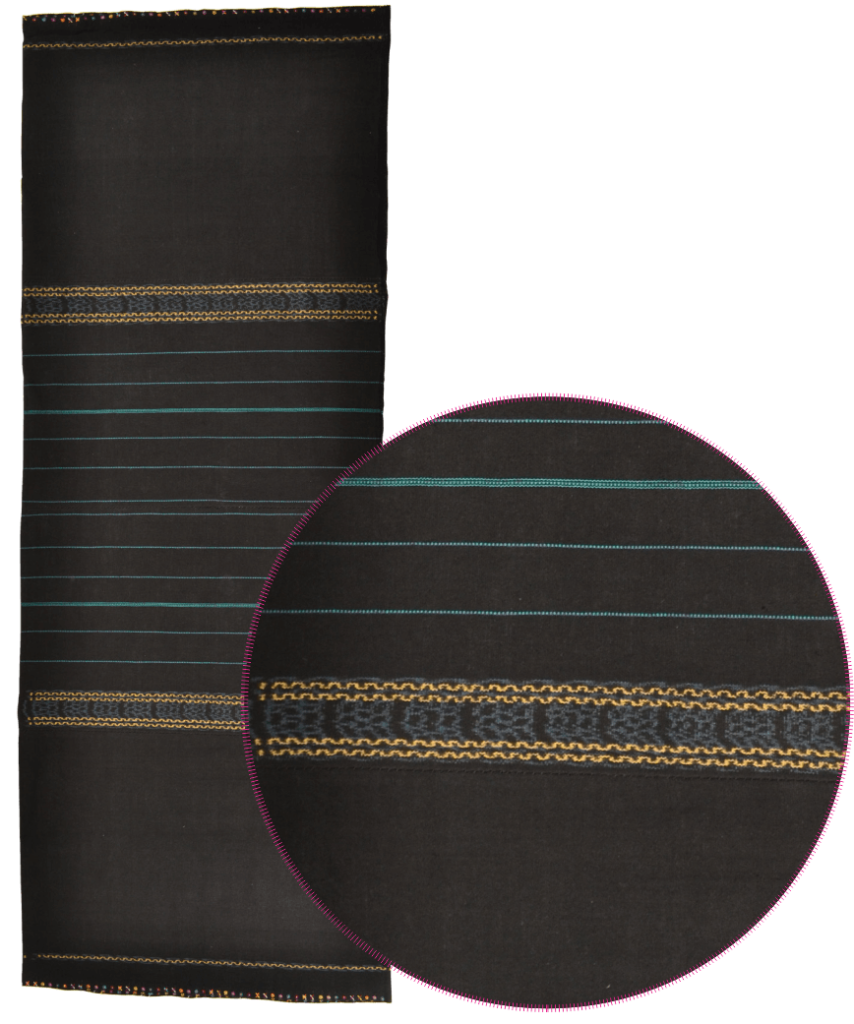
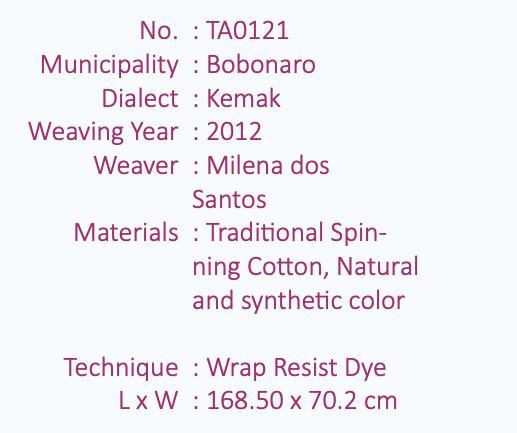
It was said that in ancient times, textile Sabu, Apiden and Bodato were constantly present at traditional festivities and could not be missed. This textile is made with natural and Futus colors called Saramata. the black color dominates this material. Aside from that it is worn by the receptionists of Kemak and Mambae ethnolinguistic origin in welcome the guest, notably those from Bobonaro, Ermera, Aileu, Ainaro, Manufahi; Covalima, and Liquiça municipalities. When wearing this textile represent courage and and hardship in life.
Tais Mgai Mane-Tais Kedelen (M)- Tais Mane
It was said that in ancient times, textile Sabu, Apiden and Bodato were constantly present at traditional festivities and could not be missed. This textile is made with natural and Futus colors called Saramata. the black color dominates this material. Aside from that it is worn by the receptionists of Kemak and Mambae ethnolinguistic origin in welcome the guest, notably those from Bobonaro, Ermera, Aileu, Ainaro, Manufahi; Covalima, and Liquiça municipalities. When wearing this textile represent courage and and hardship in life.
Tais Tadan-Tais Mane
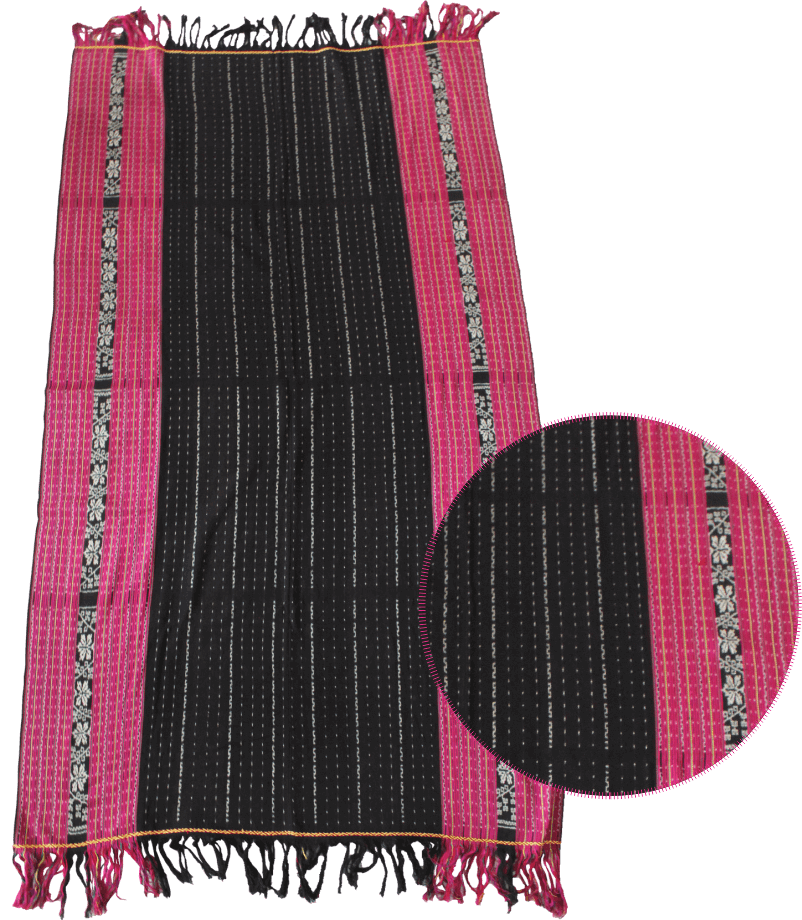
Tadan textiles are textiles with a characteristic blue color and stripes that are commonly worn as everyday clothing by Kemak people. Aside from that, it can be utilized for events, visiting locations, going to the garden, and so on. Brigette Clamagirand who documented this textile. These textiles have been replaced by sarongs, which may be purchased at the store.
Tais Mgai Ine-Tais Feto
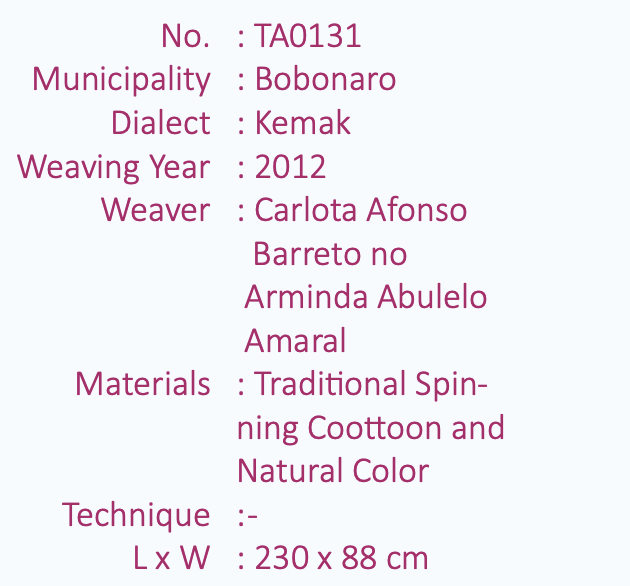
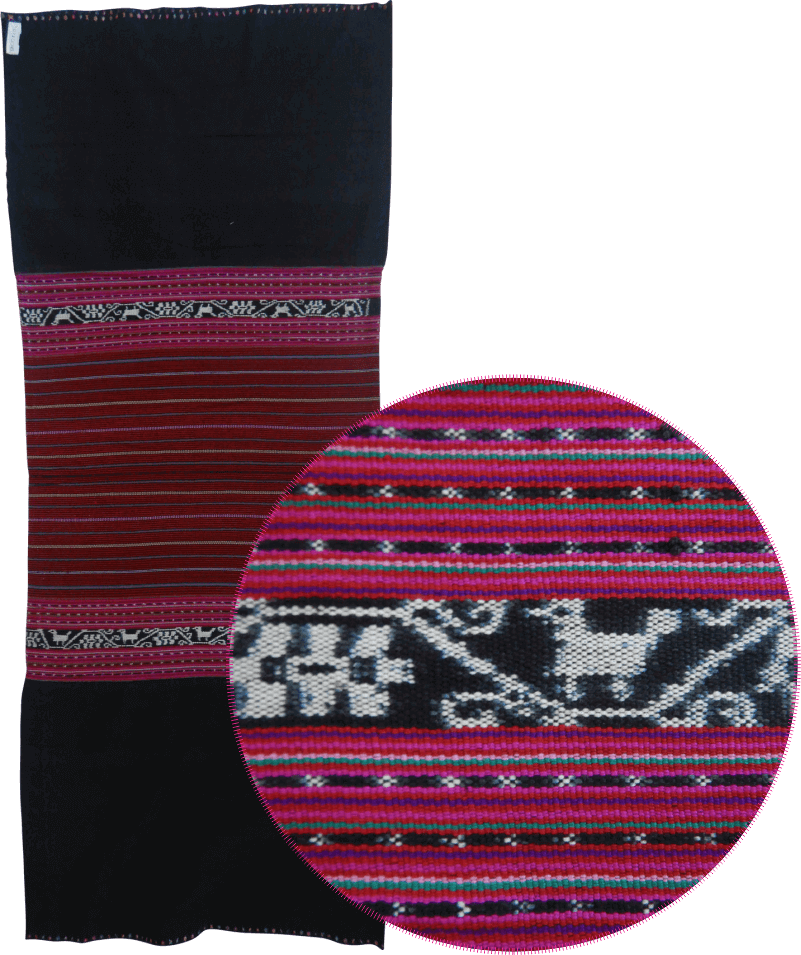
This textile motif is recognized as “Manu and Ai-etun (K),” according to the Clamagirand documentation photo, and this motif is known as the flower name “Lar echu” (K). This textile was created in response to a photograph ordered-based from the Clamagirand book in 2012. In Marobo textiles, this design is no longer used. This textile’s model is similar to textile Mgai Ine, which is created by hand from two panels. The Pa’a method is used on both sides of the material. Furthermore, the little motifs are known as “Bria, Mata kesan, and Manu Matan (K),” which frequently causes confusion as to whether they are flowers.
Tais Bo Dato-Tais Feto
This Bodato textile is known as women’s cloth, also known as “Ine” (K) – women’s fabric. The blue motif on painel women’s textile is called “Hun Bo’ot” (K), while the brown motif is called “silu-kesak (T) or pule ru’ui (K). The theme is based on swelling (arenga pinnata L.) leaves that are separated on the margins and embellished with pa’a Bria (cucumber seeds) and pa’a manu-ain (K) (chicken feet). Textile Bodato, which employs a lot of colorful commercial cotton and must be woven in the village of Marobo since it is close to the border. The illustrations in the margins depict the evolution of the traditional image. “Taun” was used for coloring the purple and green lines. This fabric is always present at traditional celebrations. Rican is the name given to this textile by the Kemak people of Atsabe and Kailaku.